
Many companies have a solid product but still struggle to grow. The problem is often not the offer. It is the system used to reach new buyers. Customer acquisition keeps getting harder as ad costs rise, attention gets shorter, and buyers compare more options before they act.
That is why customer acquisition marketing matters. It is not just about getting more traffic or more leads. It is about attracting the right people, moving them through the funnel, and turning interest into revenue in a cost-effective way. A strong plan helps you grow without wasting budget. It also helps you build a repeatable engine instead of chasing random wins.
What Is Customer Acquisition Marketing and Why Does It Matter?
Customer acquisition marketing is the process of attracting and converting new customers through targeted marketing efforts. It covers the full path from first touch to first purchase. That can include content, SEO, paid ads, email, referrals, partnerships, and sales outreach.
It matters because growth depends on a steady flow of new customers. Without a clear acquisition system, even a strong brand can stall.
Clear Definition
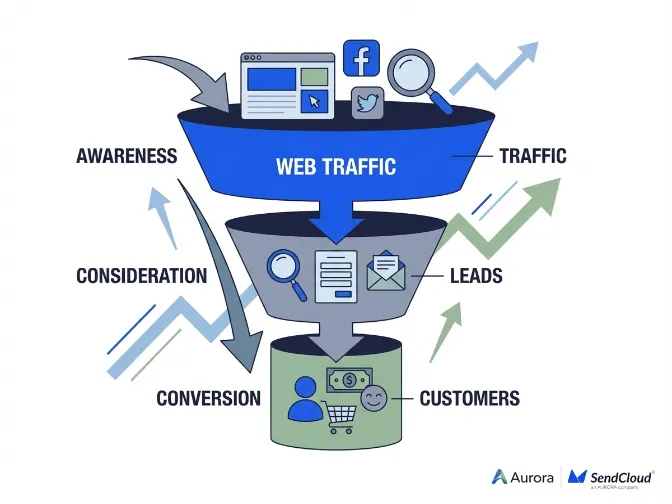
At its core, customer acquisition marketing is about bringing in new business. The goal is not only to generate attention, but to turn that attention into real customers. This usually includes three stages:
- Awareness
- Consideration
- Conversion
Each stage needs different messages, channels, and offers.
Acquisition vs Retention
Acquisition focuses on winning new customers. Retention focuses on keeping existing ones engaged and loyal. Both matter, but they solve different problems.
Acquisition helps you grow your customer base. Retention helps you increase lifetime value. The best companies do both well, but acquisition is where growth starts.
Funnel Role
Customer acquisition plays a direct role in the marketing funnel. It helps people discover your brand, understand your value, and take action. For example:
- SEO and social content build awareness
- Case studies and product pages support consideration
- Email, demos, and offers help drive conversion
That is why your strategy should not rely on one channel alone. Good acquisition works across stages.
Key Benefits
A strong customer acquisition strategy helps your business in several ways. It supports revenue growth, market expansion, and better brand visibility. It can also improve efficiency over time.
HubSpot’s 2024 State of Marketing report showed that marketers still rank lead generation as one of their top priorities, which reflects how central acquisition remains to growth. When your acquisition system is clear and measurable, it becomes easier to scale what works and cut what does not
How Do You Choose a Customer Acquisition Strategy?
There is no one strategy that fits every business. The right approach depends on your audience, your offer, your budget, and your sales cycle. A startup selling software to small businesses will not acquire customers the same way as a local service company or an online store.
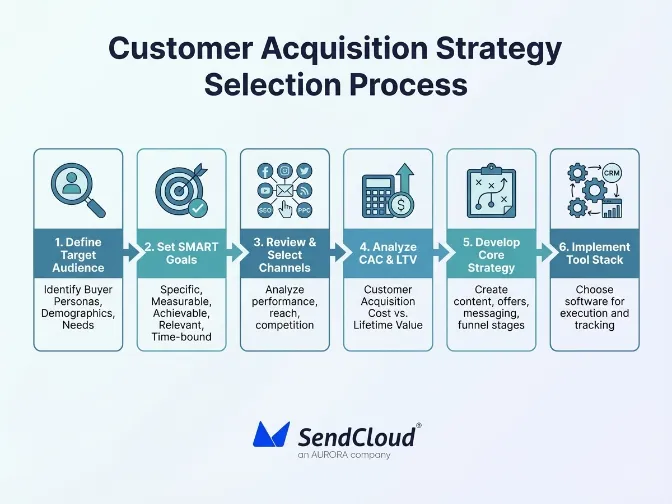
That is why strategy comes before tactics. First, define who you want to reach and what success looks like. Then choose the channels and tools that fit.
Audience First
Start with your ideal customer. If your audience is too broad, your messaging will be weak. You need to know who you are targeting, what they want, and what problem they are trying to solve. Build simple customer personas based on:
- Industry or market
- Job role or buyer type
- Pain points
- Budget level
- Buying triggers
- Preferred channels
This helps you shape better offers and better messaging.
SMART Goals
Your goals should be specific and measurable. If the goal is just “get more customers,” your team will struggle to focus. A stronger goal looks like this: increase qualified demo signups by 20% in 90 days while keeping customer acquisition cost below a target level.
SMART goals make testing and reporting much easier.
Channel Review
Once you know your audience and goals, review your acquisition channels. Some are organic and build over time. Others are paid and can create faster results. Common options include:
- SEO
- Content marketing
- Social media
- PPC
- Email marketing
- Partnerships
- Cold outreach
The best mix depends on speed, budget, and buying behavior.
CAC and LTV
A strategy is only sustainable if the economics work. That is why you need to measure customer acquisition cost and compare it with lifetime value. CAC tells you how much you spend to win one customer. LTV estimates how much revenue that customer brings over time. If CAC keeps rising and LTV stays flat, your growth model will weaken.
A simple formula for CAC is: CAC = Total sales and marketing spend / Number of new customers acquired
A healthy ratio varies by business model, but many SaaS teams aim for an LTV to CAC ratio of around 3:1 or better.
Core Strategy
Once the numbers and channels are clear, choose your main approach. Most businesses use one primary model and support it with one or two secondary channels.Three common models are:
- Inbound marketing through content, SEO, and lead magnets
- Outbound marketing through cold email, paid ads, or direct sales
- Partnerships and referrals through affiliates, influencers, or customer advocacy
The key is focus. It is better to run a few channels well than spread your budget across too many.
Tool Stack
Execution gets easier when your tools work together. Your CRM, analytics platform, and email system should support the same funnel. A practical stack usually includes:
- CRM for lead and pipeline management
- Analytics for traffic and conversion tracking
- Email platform for nurture and follow-up
- Landing pages or forms for lead capture
This helps you move faster and see what is driving results.
Which Customer Acquisition Channels Work Best?
No channel works best for every company. The right channel depends on your audience, offer, and buying cycle. Some channels are great for long-term demand. Others are better for quick testing and faster lead flow
The strongest lead generation strategies usually combine channels instead of relying on one source.
Organic Channels
Organic channels build compounding value over time. They often take longer to work, but they can lower acquisition costs in the long run.
Strong organic channels include SEO, blog content, organic social, YouTube, and community building. These channels work well when buyers do research before they buy.
Paid Channels
Paid channels can help you test offers and drive traffic faster. They are useful when you need speed, clear targeting, or quick feedback.
Common paid options include search ads, social ads, display, and sponsored placements. But paid growth gets expensive if your funnel is weak. Wordstream’s benchmark data has shown that average cost-per-click can vary widely by industry, which is why conversion quality matters more than traffic volume alone.
Email Marketing
Email is often overlooked in acquisition, but it remains one of the most effective ways to move leads toward conversion. It works especially well after someone has shown interest through a signup, download, webinar, or trial. Why email works:
- It supports lead nurturing
- It gives you direct access to interested prospects
- It helps recover leads that are not ready to buy right away
This makes email one of the most practical answers to how to acquire customers without depending only on paid media.
Partnerships
Partnerships can lower trust barriers and expand reach. This may include affiliate programs, co-marketing, referral systems, or influencer collaborations.
They work best when the partner already has access to your ideal audience and your offer fits their community naturally.
How Do You Implement Your Strategy Effectively?
A good strategy only works if execution is clear. Many teams know which channels they want to use, but struggle with setup, follow-up, and tracking. That leads to inconsistent results and wasted spend. Implementation should be simple, repeatable, and tied to measurable goals.
Campaign Setup
Start with one clear offer and one clear audience. Build your campaign around that pair. Too many offers at once can make your messaging weak. Your setup should include:
- One core audience segment
- One main conversion goal
- One landing page or lead path
- One follow-up flow
- One reporting view
This creates a cleaner test and makes optimization easier.
Lead Capture
Lead capture is where interest turns into an owned contact. Good lead capture should be easy, fast, and aligned with intent. Use forms, landing pages, trial signup pages, event registrations, or gated content. Keep friction low. Ask only for the fields you really need.
Nurture Flow
Most people do not buy on first touch. That is why nurture matters. Once a lead enters your system, you need a follow-up path that builds trust and moves them closer to action. A basic nurture flow may include:
- Welcome email
- Educational content
- Proof such as case studies or testimonials
- Product or offer reminder
- Clear CTA
This is where email becomes a major conversion tool, not just a communication channel.
Tracking ROI
You need to know which channels and campaigns create results, not just clicks. That means tracking lead quality, conversion rate, CAC, and downstream revenue.
Key metrics to watch include traffic-to-lead rate, lead-to-customer rate, CAC, and LTV. If possible, connect campaign data to CRM and revenue data so you can see full-funnel performance
What Are Real Examples of Successful Acquisition Strategies?
Real examples help turn strategy into something practical. They show how different channels work together and what a realistic acquisition flow looks like.
The best acquisition systems usually combine one demand channel with one conversion channel.
SaaS Example
A SaaS company targeting operations teams publishes SEO content around workflow problems. The content ranks for high-intent terms and attracts traffic from buyers already searching for solutions. Visitors download a template or guide, then enter an email nurture flow with product education, use cases, and demo prompts. This works because content creates intent and email helps convert it. With Aurora SendCloud , the company can segment leads by source or topic and send more relevant follow-ups over time.
E-commerce Example
An e-commerce brand runs paid social ads to promote a limited-time offer. Visitors who browse but do not buy are added to a retargeting flow through email. They receive product reminders, reviews, and a time- sensitive incentive. This approach combines fast top-of-funnel reach with lower-cost follow-up. It also helps the brand recover more value from traffic it already paid for
Key Lessons
These examples show a simple pattern. One channel brings attention. Another builds trust and drives action. The strongest systems do not stop at lead capture. They keep guiding the prospect until conversion happens. That is why channel integration matters so much in modern acquisition.
How Aurora SendCloud Supports Customer Acquisition
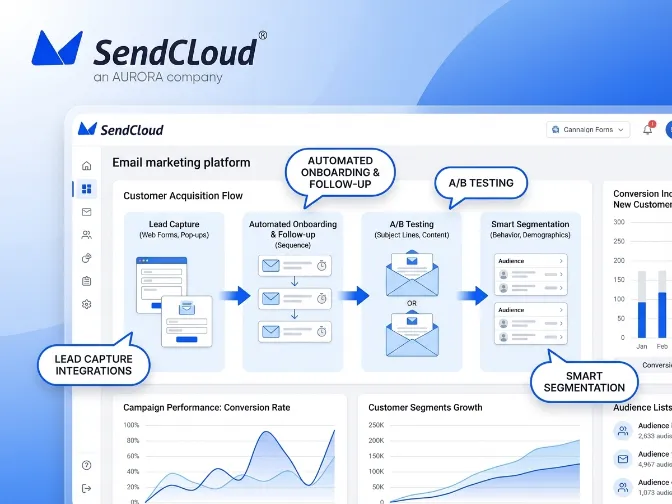
Customer acquisition gets stronger when your email platform helps you move leads from interest to action with more precision. Aurora SendCloud supports this by helping teams run targeted email campaigns, automate follow-ups, and improve message performance over time. For many businesses, that makes email a more reliable acquisition channel instead of a manual task
Lead Capture
Aurora SendCloud supports lead capture workflows through landing page and form integrations. This makes it easier to collect leads from content, campaigns, and signup paths and move them into email flows quickly.
Automated Sequences
Automated onboarding and follow-up sequences help you stay in front of leads without adding manual work. This is useful for welcome series, trial nurture, abandoned flows, and educational sequences.
A/B Testing
A/B testing helps improve campaign performance by comparing subject lines, messaging, or content formats. Small changes can lead to better open rates, clicks, and conversions over time.
Smart Segments
Aurora SendCloud’s segmentation helps you personalize acquisition campaigns at scale. You can group leads by source, interest, behavior, or stage and send messages that fit where they are in the journey. That makes it easier to attract, engage, and convert higher-value prospects.
What Beginner Mistakes Should You Avoid?
Many acquisition problems do not come from a lack of effort. They come from weak planning. Teams chase more leads, more traffic, or more channels without fixing the basics first. Avoiding a few common mistakes can improve results fast.
No Audience
If you do not define your target audience clearly, your campaigns will feel generic. That usually means lower conversion rates and higher acquisition costs.
Chasing Volume
More leads do not always mean better growth. If quality is low, sales efficiency drops and CAC rises. Focus on fit, not just volume.
No Nurture
A lead is not a customer. If you collect contacts but never follow up properly, you lose demand you already paid to generate.
Generic Messaging
Different buyers respond to different problems and offers. Generic messaging weakens relevance across channels and often lowers conversion.
Weak Tracking
Without clear reporting, you cannot tell which efforts are working. That makes it hard to improve anything in a smart way.
Ignoring Email
Many beginners focus only on ads or social. But email remains one of the highest-ROI channels for turning interest into action, especially when paired with content, trials, or product education
How Do You Build a Customer Acquisition Engine That Lasts?
Keep testing your offers, channels, and messaging. Watch your customer acquisition cost, lead quality, and conversion data closely. Small improvements across targeting, follow-up, and email nurturing can create stronger long-term growth. You can manage this more effectively with Aurora SendCloud .